
So I guess we now know that Morn is the legacy character referred to by Noga Landau?From Picardo on fb:
Is that the new Turtles alien?
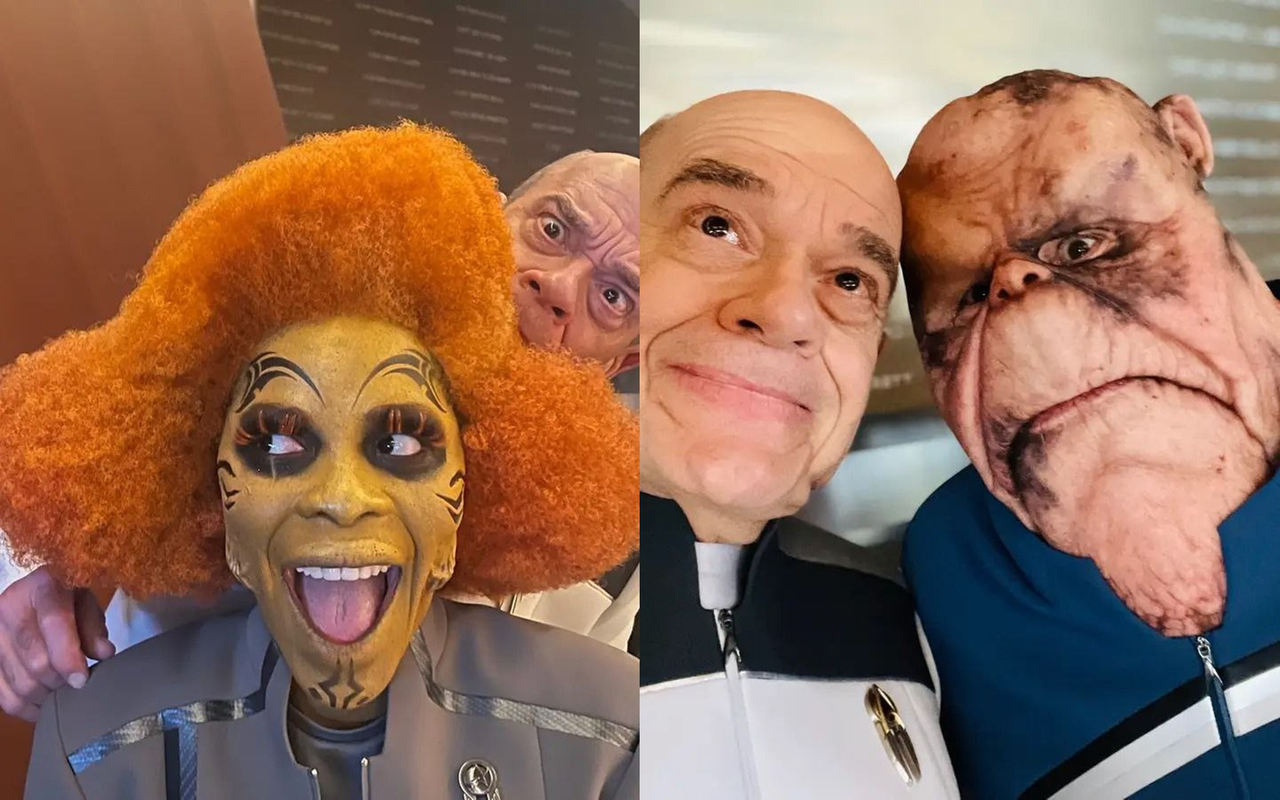


So I guess we now know that Morn is the legacy character referred to by Noga Landau?From Picardo on fb:
Is that the new Turtles alien?

It was nonsensical based upon context moving from TOS to TMP. That it eventually got an explanation doesn't make it feel less clunky moving between those two things.Sure it makes sense. Not all quarters like it, or that any explanation was made at all, and that’s their right; but nonsensical it ain’t.

Been a Trek fan for most of my 41 years. I started with, and continue to adore, The Original Series. I watched most of TNG, DS9, and Voyager throughout their original runs, only missing a little of TNG at the very beginning. I loved Enterprise from the moment I saw it and even had Faith of the Heart as one of my wedding songs.But when I say "actual fans" I mean the sphere of fans that at different times has supported Trek long enough to make it the success that it was up until Beyond.

I understand that but seems to me money isn't the issue, a broader storyline to rope in more viewers is.Greed.
Records are not as important as money. Plus, killing your actors in the name of longer seasons is considered bad form.
Not in the sense perhaps you're asking, but push the budget down and make broader appealing storylines.So look to the past for the future?
And that's good! If people are enjoying it, that's for the best.So a lot of people on this website, including the person you’re quoting.
There’s ‘actual fans’ who enjoy some of the new shows, including Academy
I am glad you're enjoying it and there should be more of you and less of me, honestly.Been a Trek fan for most of my 41 years. I started with, and continue to adore, The Original Series. I watched most of TNG, DS9, and Voyager throughout their original runs, only missing a little of TNG at the very beginning. I loved Enterprise from the moment I saw it and even had Faith of the Heart as one of my wedding songs.
I build Trek models as a hobby, devoting countless hours to them. I collect various Trek toys, figures, ships, and artwork. I have read the tech manuals, behind the scenes books, art books, and dozens of novels and comics. Hell, the colours for my wedding were gold, blue, and red. I think I can safely qualify as one of your "actual fans."
With all that said, I can say that I genuinely enjoy a great deal of the newer additions to the franchise. Is all of it spectacularly great? No. But I can find something to enjoy in just about everything from the modern era. Some shows, like Strange New Worlds, I genuinely love.
I think the real issue is not a lack of real fans, but that television itself has fundamentally changed. Long 22 episode seasons are now the exception rather than the rule across nearly all genres and franchises. That is not unique to Star Trek, and it is not proof that the franchise is failing or being disrespected. Trek has always evolved with its era, sometimes clumsily and sometimes brilliantly, but it is still here, still experimenting, still finding new audiences, and still giving longtime fans like me plenty to enjoy.

Which makes it clunky, not nonsensical. Even without an in-story explanation — which we eventually got — the simple Doylist “we changed the design because we can afford to do better now” made real-world sense even at the time.It was nonsensical based upon context moving from TOS to TMP. That it eventually got an explanation doesn't make it feel less clunky moving between those two things.
Real world sense is fine. In universe sense needed some tune up.Which makes it clunky, not nonsensical. Even without an in-story explanation — which we eventually got — the simple Doylist “we changed the design because we can afford to do better now” made real-world sense even at the time.
Truly these two things drive me crazy.Now the switch from the TV Klingons being treacherous grinning jerks who, as Gerrold put it, “fart in public airlocks”, to honor-obsessives? That seems nonsensical, since it’s not a surface-production-values change, it’s a complete shift in “personality”, having nothing to do with what the producers could afford. (I can buy that eventually the franchise might choose to retroactively explain that too, though I don’t expect it. I’ve headcanoned one, and I gather various novels have posited others.)
Revenue is the question and they are probably working on different ideas to do so to cast a broad net while maximizing revenue.I understand that but seems to me money isn't the issue, a broader storyline to rope in more viewers is.
Police procedural Star Trek incoming.Not in the sense perhaps you're asking, but push the budget down and make broader appealing storylines.

Now the switch from the TV Klingons being treacherous grinning jerks who, as Gerrold put it, “fart in public airlocks”, to honor-obsessives? That seems nonsensical, since it’s not a surface-production-values change, it’s a complete shift in “personality”, having nothing to do with what the producers could afford. (I can buy that eventually the franchise might choose to retroactively explain that too, though I don’t expect it. I’ve headcanoned one, and I gather various novels have posited others.)
Fair, but Worf is that way because he leaned into traditional Klingon values, in the same way that Spock ultimately leaned into traditional Vulcan ones. Both ended up as examples of being “more X than the Xs”, but they wouldn’t be able to do that if at least the pretense of those values wasn’t a big chunk of how those cultures defined themselves.DS9 actually did a pretty big course correction on that that rarely gets acknowledged.
Klingons are actually not honor obsessed.
WORF is honor obsessed.
Most other Klingons are treacherous scheming [censored]: Gowron, Duras, the Sisters, and even Kor to an extent. Martok is an exception but even he doesn't really dwell on honor the same way Worf does.
Exactly. The appeal to the "glory days" of the Berman era (as if those were perfect) misses huge cultural contexts. The shift towards niche markets, not just for science fiction but also the streaming world. Each section is divided away to sock away as much money as possible. Everyone is talking to industry insiders that are talking up increasing VFX budget, striving for bigger names, and reducing overhead costs as much as possible.I think the real issue is not a lack of real fans, but that television itself has fundamentally changed. Long 22 episode seasons are now the exception rather than the rule across nearly all genres and franchises. That is not unique to Star Trek, and it is not proof that the franchise is failing or being disrespected. Trek has always evolved with its era, sometimes clumsily and sometimes brilliantly, but it is still here, still experimenting, still finding new audiences, and still giving longtime fans like me plenty to enjoy.
Fair, but Worf is that way because he leaned into traditional Klingon values, in the same way that Spock ultimately leaned into traditional Vulcan ones. Both ended up as examples of being “more X than the Xs”, but they wouldn’t be able to do that if at least the pretense of those values wasn’t a big chunk of how those cultures defined themselves.

pretty sure it's called the Klingon High CouncilI admit, I have to imagine Klingons love Game of Thrones and have done their own version.

The fact that the people behind them have given a bunch of interviews.
Actually the current way of doing things is harder on actors because a single 6-12 episode season every 2 years doesn't pay the bills.Greed.
Records are not as important as money. Plus, killing your actors in the name of longer seasons is considered bad form.
It's still over your head. Lemme help you out (warning contain black and white film)
It can be both woke and a teen drama. A lot of teen dramas are "woke" Woke isn't a genre. Riverdale was woke. Harry Potter is woke. Percy Jackson is woke
can you imagine episodes like a musical and a murder mystery and a time loop and even lol muppets

Fair, but Worf is that way because he leaned into traditional Klingon values, in the same way that Spock ultimately leaned into traditional Vulcan ones. Both ended up as examples of being “more X than the Xs”, but they wouldn’t be able to do that if at least the pretense of those values wasn’t a big chunk of how those cultures defined themselves.


We use essential cookies to make this site work, and optional cookies to enhance your experience.


