• Welcome! The TrekBBS is the number one place to chat about Star Trek with like-minded fans.
    If you are not already a member then please register an account and join in the discussion!

Is it time to put Star Trek to rest?

DS9, especially the first half. If anything it's less dark than DS9 because DS9 was obsessed with throwing as much shit at the setting as it could before it ended (hence Betazed being nuked off-screen, Starfleet Academy being blown up, S31 being retroactively said to have existed since pre-TOS, etc), while in Discovery the evil conspiracy is just like two guys who Burnham beats, with the Federation as a whole unimplicated.
Deep Space Nine set up all the darker things that come with newer Trek.
 
Deep Space Nine set up all the darker things that come with newer Trek.
I don't know about that. "The Wounded" was pretty dark itself and introduced the Cardassians. "Ensign Ro" brought us the Bajorans, a victim of the Cardassians, and that episode wasn't exactly a picnic, either. The setup really substantively begins in TNG.
 
I don't know about that. "The Wounded" was pretty dark itself and introduced the Cardassians. "Ensign Ro" brought us the Bajorans, a victim of the Cardassians, and that episode wasn't exactly a picnic, either. The setup really substantively begins in TNG.
I was more referring to specific aspects and story types but yes, you are correct. To be more pedantic the Borg would be the real setting of darker things as they are a force that cannot be negotiated with, and abuse of technology that is not beneficial.
 
No, it's not.

I'm aware of the fact that I can't win all arguments. But I'll always stand up for what i think is right.
The problem is when people don't accept that go for personal attacks instead of discussing the subject of the topic.
ETA: Just saw @1001001 asking everyone to move on - I don't think my post is against the spirit of that but apologies if it is and if you want me to remove to end the topic please let me know.

I won't defend bullying but I think part of the issue is that your opinions on it are intrinsically part of your being and so it becomes a case (inadvertently/without malice) of playing both the ball and the man.

No one here has any issue with your preference for 90s Trek or your right to feel a way about the various series - far from it as there are plenty in here/on this board who would agree with you about that era being THE ERA.

Where there is fallout is that there isn't the concession made towards people who do like the series (and wider media) that you don't and it comes across as you being the arbiter of quality rather than one voice out of many.

For me, I have enjoyed DSC, PIC, LD, PRO, SNW, and so far generally enjoying SFA (although I think it is suffering from being a 10 episode series arguably more than the other series did) but that is in part because I find the characters more relatable due to being flawed.

To relate it to another series I know we both like - SG1 and SGA (currently in a rewatch of SGU and I know you and I will never agree on it but I do think it has aged quite well) - there were numerous flawed characters and anti-heroes in there (O'Neill from the death of his kid, Maybourne's redemption arc, Woolsey's development, Sheppard going from having been reduced to being more or less a heli-taxi driver for the base to military leader of Atlantis, Rodney and Carson's bromance, Todd (lots of Garak in him I think) - but they also had people like Gen Hammond or Teyla who were your TNG type shining light/moral centre characters which I guess takes the edge off a bit.

There was also the benefit of 20 episode seasons to allow us to get to know people a bit better and see the relationship develop.

I know you prefer the setting to show the best of mankind because, as you've said previously, you've seen too much shit in real life and want the aspirational bit as something to aim for...for me I have seen, and been through, a lot of shit and seeing flawed people struggle and then find a way to succeed reminds me that it is possible to do so myself.

I may be off base with some of this and hope I haven't put words in your mouth.

As an aside - both of us being rock/metal fans - keep an eye out for The Rock Orchestra. They are currently touring the UK but they do do European tours and it is a fantastic show playing rock/metal/nu metal songs with a full orchestra and theatrics and I think you'd really enjoy it
 
ETA: Just saw @1001001 asking everyone to move on - I don't think my post is against the spirit of that but apologies if it is and if you want me to remove to end the topic please let me know.

I won't defend bullying but I think part of the issue is that your opinions on it are intrinsically part of your being and so it becomes a case (inadvertently/without malice) of playing both the ball and the man.

No one here has any issue with your preference for 90s Trek or your right to feel a way about the various series - far from it as there are plenty in here/on this board who would agree with you about that era being THE ERA.

Where there is fallout is that there isn't the concession made towards people who do like the series (and wider media) that you don't and it comes across as you being the arbiter of quality rather than one voice out of many.

For me, I have enjoyed DSC, PIC, LD, PRO, SNW, and so far generally enjoying SFA (although I think it is suffering from being a 10 episode series arguably more than the other series did) but that is in part because I find the characters more relatable due to being flawed.

To relate it to another series I know we both like - SG1 and SGA (currently in a rewatch of SGU and I know you and I will never agree on it but I do think it has aged quite well) - there were numerous flawed characters and anti-heroes in there (O'Neill from the death of his kid, Maybourne's redemption arc, Woolsey's development, Sheppard going from having been reduced to being more or less a heli-taxi driver for the base to military leader of Atlantis, Rodney and Carson's bromance, Todd (lots of Garak in him I think) - but they also had people like Gen Hammond or Teyla who were your TNG type shining light/moral centre characters which I guess takes the edge off a bit.

There was also the benefit of 20 episode seasons to allow us to get to know people a bit better and see the relationship develop.

I know you prefer the setting to show the best of mankind because, as you've said previously, you've seen too much shit in real life and want the aspirational bit as something to aim for...for me I have seen, and been through, a lot of shit and seeing flawed people struggle and then find a way to succeed reminds me that it is possible to do so myself.

I may be off base with some of this and hope I haven't put words in your mouth.

As an aside - both of us being rock/metal fans - keep an eye out for The Rock Orchestra. They are currently touring the UK but they do do European tours and it is a fantastic show playing rock/metal/nu metal songs with a full orchestra and theatrics and I think you'd really enjoy it
Just a few comments to your nice post.

I can actually agree to some of your comments about bullying and such and I can understand that my style of writing is not acceptable for some people.

But that's simply my style of writing and speaking! If I think something is crap, then I say it.
And I'm also quite persistent when it comes to my opinions and bullying won't make me back down.

However, I can accept that people don't have the same taste as I have and if you look at some discussions I've been involved on the Trek BBS, I've actually had many interesting and constructive debates with many people about some of the issue. I've also tried to be more nice and polite in the debates here than I used to be once upon a time. I was a reeal hothead back then.

There are many flawed characters I like, Garak, Ro Laren, Gowron, Quark and Kira for example, even Sisko himself from time to time and I can find it interesting to see when such a character struggle and overcome the problems. My objection is when those characters are so flawed that they become boring and the episodes suffer from that.

NCIS New Orleans was an example in which many of the episodes in the later seasons were more about the characters personal demons or problems than their actual missions and even Without A Trace suffered from that in its later seasons.

Stargate SG-1 and Stargate Atlantis were actually great. Good series with good characters. A pity that the whole thiing just...........disappeared.

And I won't go into Stargate Universe this time!

As for musical tastes, I'm not that found of nu-metal but I'll take a look The Rock Orchestra. They might be interesting! :techman:

And just a few comments on some interesting things:
Many people loved what happened with Garak in the novels
Did they? :eek:
I get the impression that Garak is one of the most popular Star Trek characters.

Oh well, I would probably love if someone killed off Raffi Torres in a book because of her actions in that Garak-destroying book.

That would actually make me wanna start buying Star Trek books again! ;)

The thing that still baffles me - NCIS is doing exactly this!
Maybe that's a reason why NCIS still is so popular, actually more popular among the "common people" than Star Trek is now.
It may also have something to do with good written and exciting episodes and good, likeable characters.

Note also that NCIS isn't as good as it used to be when it had the original characters but still watchable. It's the only series I still watch, even if it's more occasionally now.

But i didn't like the reboots of Magnum PI, Walker Texas Ranger and MacGyver. I found them horrible.

Oof, not for my money. Dukat was a megalomaniac and annoying in his treatment of everyone. The Changeling leader was pure evil, and Weyoun an annoying Renfield level yes man who kept getting cloned.

The only interesting aspect was enjoyment at their defeat.
I agree with your statement about The Changeling leader. One of the few things I didn't like with DS9 was that they didn't kill her off in the last episode.

But Dukat and Weyoun were great villains.

I also find both Garak and Dukat very interesting because for a long time, it was a question if they were good guys or bad guys.

It's also a reason why I see the Cardassians as the most interesting adversaries. They didn't have super-power or super technology but they were cunning, unpredictable and dangerous.

Which was a reason that I started looking for Cardassian-related books. Unfortunately, that didn't end so well despite a promising start. :weep:
 
DS9 told me that there are shades of grey in everyone, and everyone is part product of their environment.

Quark said:
Let me tell you something about humans, nephew. They're a wonderful, friendly people as long as their bellies are full and their holosuites are working. But take away their creature comforts, deprive them of food,sleep, sonic showers, put their lives in jeopardy over an extended period of time, and those same friendly, intelligent, wonderful people will become as nasty and as violent as the most bloodthirsty Klingon

Then Waltz came along, and I wasn't impressed with the final line. Even after their conversations throughout the episode

Sisko said:
You know, old man, sometimes life seems so complicated. Nothing is truly good or truly evil. Everything seems to be a shade of grey.

Agree

And then you spend some time with a man like Dukat and you realise that there is really such a thing as truly evil.

That's where I think it fell down. I don't think the episode showed that, not true evil. Dukat was certainly more on the Evil side than Good Side, but he wasn't completely evil, even after his mental breakdown completely screwed up his cognative reasoning.


Of course those two episodes would perhaps be classed as "filler" episodes and cut from a DS9 with 65 episodes. Perhaps not, but if they didn't, they wouldn't have as much impact.
 
But one element that isn't mentioned much is the actors -- they don't want to work that length of days/weeks any more, and they don't need to. They want time for side projects, they want time with their families

Side projects... In other words, they gotta get a second job because the first one is not providing enough work.

Sorry, I can't fully accept that the 10 episode seasons are driven by studios wanting to accommodate actors wanting to do side projects or have time with family. Production companies don't work like that. Sure, you might find the occasional actor voice these opinions (though I've not seen anyone actually cite sources), but overall these short seasons are about money.


Real-world shows being cheaper occurred to me, but surely if you've built the starship bridge, crew quarters, and engineering sets, you're largely good to go. Alien planets can be random Californian wilderness, an alien facility can be a real office with a few fancy screens stuck on the walls, etc.


It boils down to needing to see the expense sheets.

A modern day police procedural (NCIS, for example) and a Star Trek series (SNW, for example) will have some production similarities thar cancel each other out in price comparison. Both use standing sets that might cost about the same to operate, so that's a wash. Both use practical effect such as explosions, blood, etc, so some of that balances.

But it's not the same across the board. SNW is going to be more dependent on visual effects, cgi, etc... SNW might have a higher budget or wardrobe for makeup when you account for alien physiology and exotic costumes.

You also need to compare cost per shot or use. Which costs more - 2 minutes of a shootout or car case with explosions or 2 minutes of a phaser fight or starship duel with explosions?

Most of the OTA or mainstream cable series are still 17 to 21 or 24 episodes a season, especially your police, fire, medical, or court series.
 
Crosby and Wheaton left because of the inability to persue other work, and that was when work was mainly controlled by a few tv/movie studios in one location

Mulgrew: It was relentless. Six days a week, fourteen hours a day… and I was in almost every scene

Farrell: It was a grind… twenty-six episodes a year and very little time to do anything else

Dawson: It was incredibly demanding… fourteen-hour days were common

Sirtis: We used to say we worked ‘actor’s hours’ — which meant getting up at four in the morning and finishing late at night

Picardo: You’re producing an hour of television every eight days. It’s a tremendous workload for everyone

Wheaton: Making network television in the 80s and 90s was brutal. We were doing 26 episodes a year, and that’s basically making a movie every eight days

Not just the cast too

Stewart: I said, 'Listen, it seems to me you people don't understand there are two sets of work going on here. There's the work we do, and the time off we get, occasionally… and then there's the rest of the crew in the office, who are here every single day and working brutal hours. We have got to make their lives easier. And the problem is, we are having too much fun!
 
Crosby and Wheaton left because of the inability to persue other work, and that was when work was mainly controlled by a few tv/movie studios in one location

Mulgrew: It was relentless. Six days a week, fourteen hours a day… and I was in almost every scene

Farrell: It was a grind… twenty-six episodes a year and very little time to do anything else

Dawson: It was incredibly demanding… fourteen-hour days were common

Sirtis: We used to say we worked ‘actor’s hours’ — which meant getting up at four in the morning and finishing late at night

Picardo: You’re producing an hour of television every eight days. It’s a tremendous workload for everyone

Wheaton: Making network television in the 80s and 90s was brutal. We were doing 26 episodes a year, and that’s basically making a movie every eight days

Not just the cast too

Stewart: I said, 'Listen, it seems to me you people don't understand there are two sets of work going on here. There's the work we do, and the time off we get, occasionally… and then there's the rest of the crew in the office, who are here every single day and working brutal hours. We have got to make their lives easier. And the problem is, we are having too much fun!
Stewart's take ends on a delightful note ... 😂
 
When it's at its best, I prefer 21st Century TV over 20th Century TV. At its best. The problems start when it's not at its best. 21st Century shows generally come in three quality types: it's usually either consistently good, consistently mediocre, or consistently bad. 20th Century TV shows have a lot more variation in quality. Which means that one bad or mediocre episode back then wasn't an indication that most of it would be bad or mediocre.

As far as how long or short a season should be? I think it depends on the show. As long as I don't feel like I'm missing anything or feel like something was rushed over, I don't mind shorter seasons. If it does feel like I'm missing something or things were rushed over, then I do mind. One way around this problem is to not have everything wrapped up by the end of the season.

The gaps between seasons now? I think the gaps are ridiculous. It's a way to kill momentum and make people lose interest. When you have the momentum going, you shouldn't stop it and you shouldn't pause it. You have to keep riding that wave. "Go with the mo." And if the waits are going to be so long, then it better be worth the wait. If it's not, you'll lose me, along with a lot of others. The End.
 
Last edited:
The gaps are a problem, simply because it’s so darned easy to forget important plot points if the previous season ended a year ago, or two years ago, or still more. (“Wait, why did this character start having visions again? Ah, whatever.”)
 
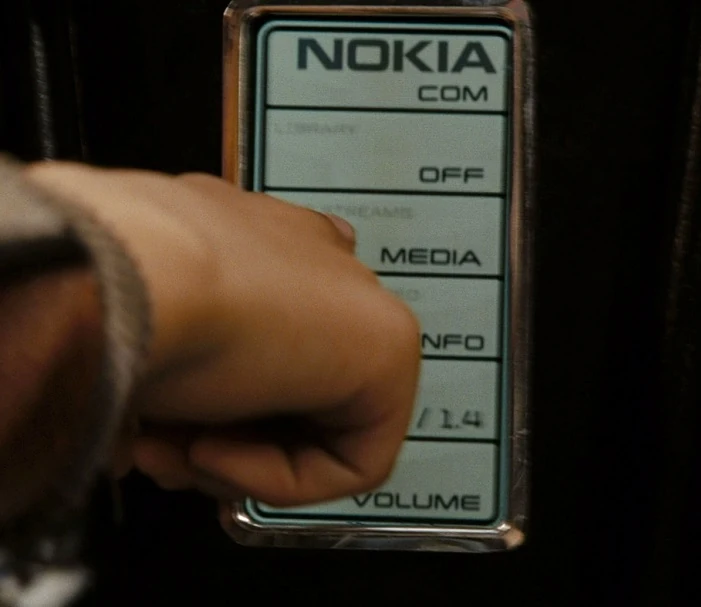
Only product placement I've noticed in Trek was in NuTrek when Uhura ordered a "Budweiser Classic". Really took me out of the movie.

And of course there's the hilarious yellow pages one in the voyage home

Certainly haven't seen any in SFA
Never forget the death notice of Ambassador Spock in Star Trek Beyond, brought to you by Hewlett-Packard's The Machine:ouch:
To view this content we will need your consent to set third party cookies.
For more detailed information, see our cookies page.
 
Deep Space Nine set up all the darker things that come with newer Trek.

I'd argue TOS had hinted at the darker things (e.g. General Order 24), but often couldn't due to overall tone of show combined with censors of the time saying "no" to showing anything so considerable/big on screen? By the mid-1990s, the landscape was much more open to wider arrays of expression.
 
Now show a list of quotes where actors are celebrating how much easier it is now.

It'd likely be harder (Is the show needing a rest or the actors?!!), taking into account precision of placement of characters, retakes needed, etc, combined with the prevalence of CGI, matching up lighting between CGI models and the studio's lighting for live action - a CGI re-render to fix a mistake in omnidirectional lighting sources is expensive, as is a live action reshoot but for differing reasons. (I'd also reckon the same-old teal/orange palette is to help blend CGI easier, as well as helping those with color blindness as the duotone/complementary palette would make things easier...? But how would sound-impaired people be addressed, as today's amounts of music - much more frequent than in decades' past - are sometimes blended in that make verbal speech harder to discern for some in the audience, and some report it's due to factors other than a person's hearing (sound mixing for multiple channels is one claim.)
 
Memory Alpha (unsurprisingly) has a short article on product placement, with some examples.

 
Deep Space Nine set up all the darker things that come with newer Trek.
No, TOS actually had quite a lot of dark things in their episodes.

Ready to implement General Order 24 ("A TASTE OF ARMAGEDON"), a teenager forced to spend his life with no other person around ("CHARLIE X"), attempted rape by a dark version of a captain ("THE ENEMY WITHIN"), bigotry on the bridge ("BALANCE OF TERROR"), murdering witnesses of a panetary genocide ("THE CONSCIENCE OF THE KING"), mind controlling inmates in an asylum ("DAGGER OF THE MIND"), the return of 'superhumans' bent on conquest ("SPACE SEED"), a computer forcing a planet's population to be under direct control of it ("THE RETURN OF THE ARCHONS"), and more.

And those examples are just the first season.

Hell, the PILOT of the franchise had beings, including sentient ones like Pike and Vina, trapped in a zoo for the purpose of breeding stock.

The franchise has had dark threads in it from the first shot ever put to camera, so blaming DS9 for the darker stuff in the franchise is completely absurd and false.
 
If you are not already a member then please register an account and join in the discussion!

Sign up / Register


Back
Top