
-
Welcome! The TrekBBS is the number one place to chat about Star Trek with like-minded fans.
If you are not already a member then please register an account and join in the discussion!
You are using an out of date browser. It may not display this or other websites correctly.
You should upgrade or use an alternative browser.
You should upgrade or use an alternative browser.
How powerful were the desktop computers in TNG?
- Thread starter Candleicious Ghost
- Start date


With all the various time travel incidents and the Temporal Cold War, just about anything could have been changed at once point in time.
Wasn't Henry Starling cited as being responsible for the tech the Federation has in Voyager?
That was time travel shenanigans
Never thought that TAPE was an acronym in TOS.

Well, using FASA's rules for record tapes, they only had eight megabytes per tape  . This was still better than the 1.44 megabytes for a 3.5 inch floppy disk. This is called "failure of imagination".
One of my criticisms on some of the FASA materials is that some body didn't do their due diligence on what had already been written.
On the other hand, 1,255,755,000 terabyte computer memory of a Galaxy class starship in the FASA publication 'Star Trek the Next Generation Officer's Manual', is probably close to being dead on for the late 1980s. DNA based memory systems can be far higher.
. This was still better than the 1.44 megabytes for a 3.5 inch floppy disk. This is called "failure of imagination".One of my criticisms on some of the FASA materials is that some body didn't do their due diligence on what had already been written.
On the other hand, 1,255,755,000 terabyte computer memory of a Galaxy class starship in the FASA publication 'Star Trek the Next Generation Officer's Manual', is probably close to being dead on for the late 1980s. DNA based memory systems can be far higher.
Tape is just a holdover from an earlier technology. I recall using "taping" when referring to recording on my DVR. I
And of course the typical save icon today is based on a piece of media a generation have never seen, let alone lost. Our portable computers are called phones. I don't think Alexander Graham Bell would recognise it as such.
TNG writers were very careful to avoid real world units as they would be woefully out of date a few years later. The one exception was Data, who had an "ultimate storage capacity of eight hundred quadrillion bits" and a "linear computational speed has been rated at sixty trillion operations per second"
That's 100PB. Or about the space taken by about 10 full racks in a data centre 100,000 terrabytes.
In 1986 however you'd be looking at 1GB in a rack, you'd need on the order of 100 million racks of space. That would have seemed unimaginable at the time of TNG even for people who understood exponential growth (and people like Sternbach were not stupid).
A 3.5" high density floppy is about 50kBytes per cubic centimetre. A modern hard drive is about 50Gbytes per cubic centimetre - 1 million times the density.
So in 40 years storage space has increased in the million fold range (maybe 10m, whatever)
if that rate continued you could fit Data's storage capacity in a grain of rice by the mid to late 21st century.
However rate hasn't continued. In 2006 I remember being somewhat excited by our new storage server which could fit 48 1TB drives in 4U, or 500TB in a rack. Today it's only 20 times that - in 20 years. Maybe if you used top of the line hard drives you could argue for a 40 fold increase. At that rate it will take 150 years to reach grain of rice levels.
Either way it's a stupidly low number.
Likewise with computation. You can argue a modern CPU does in the region of 1 trillion operations per second, but a modern NVidea GTX already performs faster than Data - https://www.amazon.co.uk/PNY-NVIDIA-6000-Blackwell-Workstation/dp/B0FW53295F - you can get that delivered by Saturday and does about 100 trillion operations per second.

That's the best answer
No it's not. It's the most obvious and least interesting answer. Sure it's technically correct, but despite what Number 1.0 says that's not the best kind of correct

TNG writers were very careful to avoid real world units as they would be woefully out of date a few years later. The one exception was Data, who had an "ultimate storage capacity of eight hundred quadrillion bits" and a "linear computational speed has been rated at sixty trillion operations per second"
I'm actually kinda okay with Data being relatively limited. Besides being unique technology, his positronic brain was part of a whole system designed to emulate a human. He therefore only required sufficient processing power to achieve that end . . . turning him into a full-scale data storage device and supercomputer (even by early 24th Century standards) would seem to go against that goal, to an extent.

Not really. The conceit of the episode is that the home computer revolution of the 80s and 90s was a result of cannibalising the Timeship. But it only got him as far as Windows 95 and Pentium processor-level technology, and he had exhausted the limits of what the ship could offer.Wasn't Henry Starling cited as being responsible for the tech the Federation has in Voyager?
That was time travel shenanigans
Without going back to the future to steal more tech, that was the end of the road.
Within the Trek continuity, it's a bootstrap paradox, the same as Dr Nichols inventing transparent aluminium in 1986.
The next problem is exactly what is an isograted circuit? No, that first answer isn't it.Not really. The conceit of the episode is that the home computer revolution of the 80s and 90s was a result of cannibalising the Timeship. But it only got him as far as Windows 95 and Pentium processor-level technology, and he had exhausted the limits of what the ship could offer.
Without going back to the future to steal more tech, that was the end of the road.
Within the Trek continuity, it's a bootstrap paradox, the same as Dr Nichols inventing transparent aluminium in 1986.
Obviously, the term "isograted" is supposed to reflect 'Isolinear'.
There are major problems with this.
First of all, what technology did the Aeon have??? This is the question of questions for the time being.
Answer: what we saw, wasn't.
The entire episode arc, isn't what we were told.
So, what have we been told?
We have been told that the Voyager, had to be destroyed. Wrong. We have been told that Kirk and company were rank amateurs , even Sisko and company were...
So what do actual professionals do?
Logic dictates that replacement occurs to handle the complete situation. Therefore the Aeon, wasn't the actual Aeon. But something dummy uped for the event. In other words preparation required something that could fool the systems aboard the Voyager. As to Braxton...we never saw the actual.

I always took them as minimal terminals to interact with the ships' main computer cores.
But as modern computing has changed, Trek's treatment of such things has as well.
Plus, the writers didn't have a sodding clue. Which complicated matters. See: Stack of PADDs to indicate and illustrate hard work being done. Or holographic paper coming off the holodeck. Or holograms remaining intact and slowly fading away when they stepped outside the holodeck. Or...
But as modern computing has changed, Trek's treatment of such things has as well.
Plus, the writers didn't have a sodding clue. Which complicated matters. See: Stack of PADDs to indicate and illustrate hard work being done. Or holographic paper coming off the holodeck. Or holograms remaining intact and slowly fading away when they stepped outside the holodeck. Or...

IIRC the 8" disc came from IBM in 1971. The 3.5" first showed up in 1981, and was in PCs as early as 1983, then getting widely adopted post-Macintosh in 1984, in PCs, Amigas, and Atari STs, etc. So, for 3.5" floppies, shy of a decade and a half after filming stopped.Even an 8 inch floppy barely existed (or maybe didn't yet exist) when TOS was made. 1.44s in 3.5-inch hard plastic cases wouldn't come along for 2 decades after filming stopped.

Even the clicking noises make sense, what with the hazards of space…there actually is somewhat of a retro return:
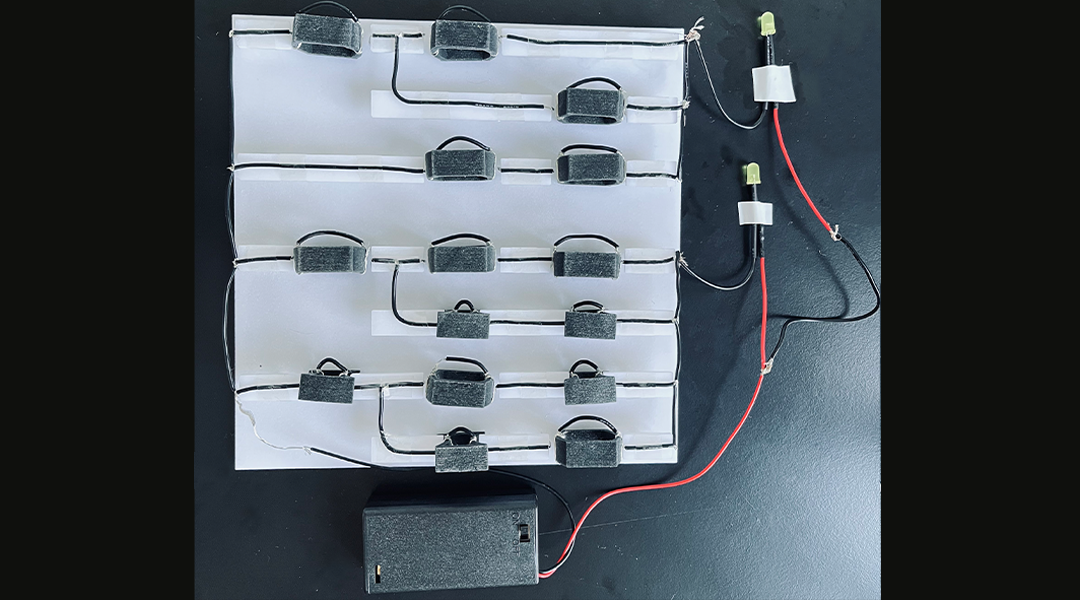
 www.advancedsciencenews.com
The Buran program gave us DRAKON, a visual programming language. I see Trek going down that path.
Cyberpunk futures are extensions of what we have now.
I don’t think hackers would know what to make of Trek’s computers….coding so tight due to savants from other species hard-wiring things.
Reviving mechanical computers for use in extreme environments - Advanced Science News
Putting a modern spin on old tech, scientists create a mechanical computer for situations where electronic computers break down.
www.advancedsciencenews.com
The Buran program gave us DRAKON, a visual programming language. I see Trek going down that path.
Cyberpunk futures are extensions of what we have now.
I don’t think hackers would know what to make of Trek’s computers….coding so tight due to savants from other species hard-wiring things.
Similar threads
- Replies
- 63
- Views
- 10K


- Replies
- 56
- Views
- 4K


If you are not already a member then please register an account and join in the discussion!