Dr. Bashir could do some alliterative verse featuring his teddy bear and that concept."Chiaroscuro" is great and all, but I'm still waiting for the Trek novel that uses "cucoloris". :|

-
Welcome! The TrekBBS is the number one place to chat about Star Trek with like-minded fans.
If you are not already a member then please register an account and join in the discussion!
You are using an out of date browser. It may not display this or other websites correctly.
You should upgrade or use an alternative browser.
You should upgrade or use an alternative browser.

"Chiaroscuro" is great and all, but I'm still waiting for the Trek novel that uses "cucoloris". :|
Any relation to George Coulouris?
Wikipedia mentions a claim that the term originated from George Cukor, but another possibility is that it's from the Greek term "kukaloris" or the German word "Kokolores".Any relation to George Coulouris?
Basically, its etymology is unclear. Some years ago I heard Roger Ebert use the word in his commentary track for "Citizen Kane" (and that was a little confusing in a commentary where the name Coulouris also was being bounced around) and found it to be a wonderful word that I'd never heard before.
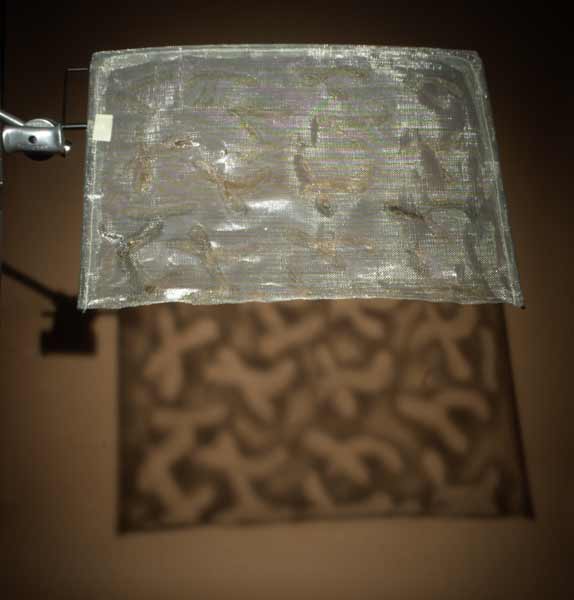
Cucoloris - Wikipedia
Last edited:

Why? The cinematographers and gaffers on TOS used the object like crazy.. . . but I'm still waiting for the Trek novel that uses "cucoloris"
It sounds like if someone managed to create a hybrid of a cuckoo and a loris.

Every writer has their preferred words; when I workshopped A Choice of Catastrophes, a member of my writing group complained that she had read the word "niggling" more time in our draft than in the entire rest of her life put together!
Oh, absolutely. We all have our pet words and phrases we need to avoid overusing in the same book, lest they start calling attention to themselves.
That being said, my own policy is that the clock resets with each new book or story, so I only worry about reusing a pet phrase in the same book. I don't worry about the same phrase popping up six books in a row, since I assume that a year or two has passed since the reader read my last book in the same franchise. (And that, chances are, the audience for my Godzilla novel and my Batman novel don't overlap that much.)
Readers who read several of my books in rapid succession may disagree.

Because it's a fun word!Why? The cinematographers and gaffers on TOS used the object like crazy.
So, asking as someone who's been doing professional editing but is still a bit new to the field...what are published authors' opinions on using the word "said", in cases like:
"Set course for Ceti Alpha V", Captain Kirk said.
"Course laid in for Ceti Alpha V", Sulu said.
That may be kind of a bad example, because my concern is the neutrality and opacity of the word "said", but my point is that personally I don't really like the word in fiction because I don't feel it provides any emotional context for how people are saying things.
There's also the general point that I feel writers should generally be mindful of word repetition, but mostly it's that at best "said" without anything else leaves a statement void of emotional context, and at worst can leave it ambiguous as to whether a character is being serious, or joking, sarcastic, etc.
I was admittedly a bit aggressive in my initial efforts to discourage the author I've worked with most from using "said", and he reasonably asked that I dial that back a bit, but I still find it bothersome, especially if it's used in rapid succession. It's not quite so bad in the example above, where Kirk's giving a rote order and Sulu is acknowledging it (though "Sulu acknowledged" might be better in that example), but for more meaningful dialog it makes my jaw clench a little bit.
There's also the case where "said" is used in cases where characters are asking questions (e.g. ""Are you sure you want to do that?" Captain Picard said.") which is even more jaw-clenching for me.
Again, totally willing to grant that this may be a Me Problem, but since we're talking about authors and the things they do, this seemed like a good place to ask the question and gain more perspective. TY!
"Set course for Ceti Alpha V", Captain Kirk said.
"Course laid in for Ceti Alpha V", Sulu said.
That may be kind of a bad example, because my concern is the neutrality and opacity of the word "said", but my point is that personally I don't really like the word in fiction because I don't feel it provides any emotional context for how people are saying things.
There's also the general point that I feel writers should generally be mindful of word repetition, but mostly it's that at best "said" without anything else leaves a statement void of emotional context, and at worst can leave it ambiguous as to whether a character is being serious, or joking, sarcastic, etc.
I was admittedly a bit aggressive in my initial efforts to discourage the author I've worked with most from using "said", and he reasonably asked that I dial that back a bit, but I still find it bothersome, especially if it's used in rapid succession. It's not quite so bad in the example above, where Kirk's giving a rote order and Sulu is acknowledging it (though "Sulu acknowledged" might be better in that example), but for more meaningful dialog it makes my jaw clench a little bit.
There's also the case where "said" is used in cases where characters are asking questions (e.g. ""Are you sure you want to do that?" Captain Picard said.") which is even more jaw-clenching for me.
Again, totally willing to grant that this may be a Me Problem, but since we're talking about authors and the things they do, this seemed like a good place to ask the question and gain more perspective. TY!

You could drop the question of "to said or not to said" altogether:
"Report, Ensign." Kirk drummed his fingers on the arm of the chair.
Chekov's head snapped up. "Nothing new, Keptin." He shrugged. "Sorry."
No said, replied, etc. but still manages to identify who's talking.
"Report, Ensign." Kirk drummed his fingers on the arm of the chair.
Chekov's head snapped up. "Nothing new, Keptin." He shrugged. "Sorry."
No said, replied, etc. but still manages to identify who's talking.
Last edited:
On the other hand, using other verbs to tag quotes can get tiresome, too. And lead to some weird double entendres. I haven't actually seen this (although Doyle used the verb more than once when tagging quotes) in any work of fiction, but I expect to be ROFLMFAO if I ever do:
If it's obvious who's speaking (as in Laura's example), I tend to avoid quote-tagging entirely."Sperm!" he ejaculated.
Generally, the fashion these days is to avoid dialogue tags other than the occasional "said" or "asked" or maybe "shouted." And indeed, many modern books often avoid dialogue tags as much possible, if it's clear by context from who is speaking and to whom. (As in a conversation between just two people, with distinctly different voices.) Indeed, it's not uncommon these days to encounter entire pages of dialogue without any attributions whatsoever.
And, speaking as an editor, I can say that it is possible to go overboard with the dialogue tags, to the point of redundancy. You want to avoid text like:
Carol looked at Jim quizzically. "What are you doing, Jim?" she questioned him.
"Looking for clues, Carol," Jim responded to her.
We can probably figure out who is speaking to who without so much help from the author:
Carol looked at Jim. "What are you doing?"
"Looking for clues."
That being said, I sympathize in that I'm personally fond of more expressive tags like "insisted," "conceded," "admitted," "confessed," etc., and probably use them more than is fashionable these days. And, yes, I have on occasion been accused of having a somewhat old-fashioned prose style that may be showing its age at times.
One other factor: The conventional wisdom is that "said" is invisible in prose, but maybe not in audiobooks? I've heard secondhand reports that people listening to audiobooks don't like hearing "said" spoken aloud every time a character speaks. Something else to keep in mind.
And, speaking as an editor, I can say that it is possible to go overboard with the dialogue tags, to the point of redundancy. You want to avoid text like:
Carol looked at Jim quizzically. "What are you doing, Jim?" she questioned him.
"Looking for clues, Carol," Jim responded to her.
We can probably figure out who is speaking to who without so much help from the author:
Carol looked at Jim. "What are you doing?"
"Looking for clues."
That being said, I sympathize in that I'm personally fond of more expressive tags like "insisted," "conceded," "admitted," "confessed," etc., and probably use them more than is fashionable these days. And, yes, I have on occasion been accused of having a somewhat old-fashioned prose style that may be showing its age at times.
One other factor: The conventional wisdom is that "said" is invisible in prose, but maybe not in audiobooks? I've heard secondhand reports that people listening to audiobooks don't like hearing "said" spoken aloud every time a character speaks. Something else to keep in mind.
Last edited:
Been there, done that.You could drop the question of "to said or not to said" altogether:
"Report, Ensign." Kirk drummed his fingers on the arm of the chair.
Chekov's head snapped up. "Nothing new, Keptin." He shrugged. "Sorry."
No said, replied, etc. but still manages to identify who's talking.
Is that supposed to be a bad thing?And, yes, I have on occasion been accused of having a somewhat old-fashioned prose style that may be showing its age at times.
I'm glad we're kind of on the same page in favoring more explication of how characters are feeling.Generally, the fashion these days is to avoid dialogue tags other than the occasional "said" or "asked" or maybe "shouted." And indeed, many modern books often avoid dialogue tags as much possible, if it's clear by context from who is speaking and to whom. (As in a conversation between just two people, with distinctly different voices.) Indeed, it's not uncommon these days to encounter entire pages of dialogue without any attributions whatsoever.
And, speaking as an editor, I can say that it is possible to go overboard with the dialogue tags, to the point of redundancy. You want to avoid text like:
Carol looked at Jim quizzically. "What are you doing, Jim?" she questioned him.
"Looking for clues, Carol," Jim responded to her.
We can probably figure out who is speaking to who without so much help from the author:
Carol looked at Jim. "What are you doing?"
"Looking for clues."
That being said, I sympathize in that I'm personally fond of more expressive tags like "insisted," "conceded," "admitted," "confessed," etc., and probably use them more than is fashionable these days. And, yes, I have on occasion, been accused of having a somewhat old-fashioned prose style that may be showing its age at times.
One other factor: The conventional wisdom is that "said" is invisible in prose, but maybe not in audiobooks? I've heard secondhand reports that people listening to audiobooks don't like hearing "said" every time a character speaks. Something else to keep in mind.
Interesting that you bring up audiobooks...I'm just the editor, and the author is self-publishing, so really I'm just offering a lot of opinions (some of which I feel more strongly about than others
 ), but he is making audiobooks of his work as well (I wouldn't mind linking folks if they're curious, but I'd feel weird about tooting my own horn unsolicited). I don't really know what he's doing with my edits, or whether he's making additional audiobook-specific changes after reviewing my edits (he may have mentioned this stuff in discussion with me, but I don't really want to go through my chat logs to confirm or disprove that). I've occasionally joked that I've never actually read his books, since the final versions sometimes have substantial changes from what he originally sent me, and certainly don't 100% match what I'm sending back to him (he definitely doesn't accept every single one of my changes).
Is that supposed to be a bad thing?
When you're writing for readers in the 21st century? And trying to make a living at it?
Possibly.
On the question of "said" and other dialogue tags, I think it's apt to quote the motto of my 11th-grade English teacher, Mr. Pierato: "Moderation in all things, including moderation." I have no respect for these "writing rules" that say something should always be used or never be used. It's valid to say that something shouldn't be overused, but people have way too much of a tendency to react to one extreme by racing to the opposite, equally bad extreme, rather than seeking a healthy middle ground.
So yeah, you don't want to go overboard with flowery tags like "he expostulated" or "she screeched," but limiting oneself exclusively to "said" is depriving oneself of a useful tool. Sometimes a more expressive verb is the best way to convey a character's tone or attitude. It shouldn't be a mindlessly applied absolute; rigid legalism is just an excuse to avoid using thought and judgment. It should be based on whatever works best in a given case.
And yes, in the age of audiobooks, there's good reason for finding ways to attribute dialogue without "said" tags at all, as in Laura's example. But the downside is that it uses a lot more words, which can be a problem if you have to fit a story or novel within a maximum word count. There are benefits and drawbacks to every approach, which is another reason it makes no sense to insist that a given approach should be inflexibly required or forbidden.
So yeah, you don't want to go overboard with flowery tags like "he expostulated" or "she screeched," but limiting oneself exclusively to "said" is depriving oneself of a useful tool. Sometimes a more expressive verb is the best way to convey a character's tone or attitude. It shouldn't be a mindlessly applied absolute; rigid legalism is just an excuse to avoid using thought and judgment. It should be based on whatever works best in a given case.
And yes, in the age of audiobooks, there's good reason for finding ways to attribute dialogue without "said" tags at all, as in Laura's example. But the downside is that it uses a lot more words, which can be a problem if you have to fit a story or novel within a maximum word count. There are benefits and drawbacks to every approach, which is another reason it makes no sense to insist that a given approach should be inflexibly required or forbidden.
Or possibly not. Consider that most of your ST books, especially the more recent ones, get mostly ratings in the "Above average" to "Outstanding" range, and then don't overthink your writing style.When you're writing for readers in the 21st century? And trying to make a living at it?
Possibly.
The editor I hired to get my own novel into publishable shape thought my conscious decision to "leave everything to the imagination" in sex scenes (and in the attempted rape scene), and to use little or no profanity, was old-fashioned, but I explained my rationale, and she accepted it. (And for the record, just having the characters wonder if an unspecified sex act is even physically possible should be enough to shift their imaginations into overdrive.)
One of my stock bits of editorial device is: "Trust your dialogue to stand by itself."
You don't want to water down perfectly good dialogue by overexplaining it:
"What are you doing?" she asked Jim quizzically, with a puzzled expression on her face, wondering what he was up to.
You don't want to water down perfectly good dialogue by overexplaining it:
"What are you doing?" she asked Jim quizzically, with a puzzled expression on her face, wondering what he was up to.
So far I believe the only two dialog tags my author explicitly expressed dislike for are "informed" and "urged". He also discouraged using them in general, "unless you feel it's really unclear how something is intended to be conveyed". I don't really agree with that approach, but it's his work, so I'm generally abiding by that, though there have definitely been instances where I felt a tag (or other form or clarification) was needed, or at worst where I needed to comment that I couldn't tell how a character was intended to be saying something. He can always reject my edits as he sees fit.
I've edited for other people as well, to be sure, but this is a six-book series and the only author who I've edited for extensively (and for pay) thus far, and only the second time I got a decently fleshed-out Manual of Style supplementing our default Chicago Manual.
I've edited for other people as well, to be sure, but this is a six-book series and the only author who I've edited for extensively (and for pay) thus far, and only the second time I got a decently fleshed-out Manual of Style supplementing our default Chicago Manual.
Similar threads

- Replies
- 30
- Views
- 809


- Replies
- 151
- Views
- 4K


- Replies
- 0
- Views
- 172

- Replies
- 6
- Views
- 10K

If you are not already a member then please register an account and join in the discussion!