• Welcome! The TrekBBS is the number one place to chat about Star Trek with like-minded fans.
    If you are not already a member then please register an account and join in the discussion!

Author Habits That Annoy You

@Greg Cox, did you put together the Tor edition of Matheson's Bid Time Return / Somewhere in Time?

I handled our original trade paperback edition, along with most of our Matheson reprints back in the day. I also assembled several new Matheson collections and edited four of his later novels: Seven Steps to Midnight, Now You See It, Hunted Past Reason, and Other Kingdoms.

And, yes, I made the call to publish it as Somewhere in Time, not Bid Time Return, since the movie title had long ago eclipsed the original book title at that point. Ditto for publishing The Shrinking Man as The Incredible Shrinking Man, since the movie title was much better known.

With Richard's permission, of course.
 
Interesting. I've always wondered why a living author would allow a competitive novelization if the original novel was still under copyright.

Boy, Fleming must have really not liked that story -- or maybe he just didn't need to worry about royalties anymore.
The Spy Who Loved Me was just a short story. And it never would have made an actual bond movie. Bond is hardly in it, at all. Kind of like Quantum of Solace, and Octopussy stories: Fleming seems to have put Bond in there to get the story sold or included in an anthology.
 
I handled our original trade paperback edition, along with most of our Matheson reprints back in the day. I also assembled several new Matheson collections and edited four of his later novels: Seven Steps to Midnight, Now You See It, Hunted Past Reason, and Other Kingdoms.

And, yes, I made the call to publish it as Somewhere in Time, not Bid Time Return, since the movie title had long ago eclipsed the original book title at that point. Ditto for publishing The Shrinking Man as The Incredible Shrinking Man, since the movie title was much better known.

With Richard's permission, of course.
Neat! I have the MMPB Tor edition from 2008, which doesn't have any movie branding but does mention it on the back cover. And the whole reason I own it is I found it in an airport bookstore after my flight was delayed and thought, "Hey, I liked that movie..." so your plan worked.
 
I will point out that Clarke's 2001: A Space Odyssey is a novelization. The movie was based on several short stories (one of which, "The Sentinel," I've read; it was in something like my 7th or 8th grade reader, as I recall, and also in a "making of" book), and the novel and screenplay were developed concurrently.

One of the must-read books for 2001 fans is The Lost Worlds of 2001, which has material from various drafts of the story. Looks like it's been out of print for rather a while, though. I bought the American Signet paperback in the mid-'70s. It was easier to find then.

(Speaking of 2001, one of the questions it left unanswered was, "if the zero-gravity toilet uses 'dalkron eliminators,' what exactly is 'dalkron'?")

Nothing, it's been eliminated.
 
Speaking of movie tie-in editions, I do recall one (hypothetical) instance that gave me pause.

At the time, Universal was talking about remaking The Incredible Shrinking Man -- as a comedy vehicle for Eddie Murphy.

This worried me. The book, as great as it is, is not remotely funny, so hyping the proposed comedy version on the cover of the original novel bordered on false advertising. On the other hand, as noted, it would be professional malpractice not to try and capitalize on the big new movie -- for both Richard's and Tor's sake.

I actually asked Richard for his thoughts on the matter, just in case the situation arose.

As I recall, he sighed wearily and said something like, "Do what you have to do, Greg."

Thankfully, the Eddie Murphy movie never got escaped Developmental Hell, so I was spared this dilemma.

(Richard later managed to get the film rights to his book back from Universal. Hence, the new, non-comedic remake in France.)
 
This bothers me. I didn't realize this had happened until this past week. Now, I have to track down used books before the edits.


This is a problem with eBooks. This is why I will only now purchase eBooks that I can download, so that I can preserve both the cover and the content.
 
This is why I will only now purchase eBooks that I can download, so that I can preserve both the cover and the content.
And what exactly makes you think they're safe? Unless you're allowed to commit them to either paper, or CD-R, or something else that cannot be altered, or transfer them to a box that's airgapped from the Internet, they can still be altered.
 
And what exactly makes you think they're safe? Unless you're allowed to commit them to either paper, or CD-R, or something else that cannot be altered, or transfer them to a box that's airgapped from the Internet, they can still be altered.
Epubs don't go out to the Internet and self update. Once you have one downloaded, it is what it is.You can use programs like Sigil and Calibre to edit them.
 
This bothers me. I didn't realize this had happened until this past week. Now, I have to track down used books before the edits.


This is a problem with eBooks. This is why I will only now purchase eBooks that I can download, so that I can preserve both the cover and the content.
You might have to track down first editions, if it means that much to you. A lot of these books were already edited within the authors' lifetimes, and far more extensively than any recent posthumous edits that have taken place.
 
You might have to track down first editions, if it means that much to you. A lot of these books were already edited within the authors' lifetimes, and far more extensively than any recent posthumous edits that have taken place.

A lot of authors re-edit their own work in new editions to remove things they've changed their minds about or realized were inappropriate. Creativity is a process dependent on editing to begin with, as creators revise and refine their ideas as best they can before publication, and there are always mistakes we miss or better ideas that occur to use after the fact, so most creators welcome the chance to make a few more tweaks. I've done it myself in the collections of my Analog Hub stories (a couple of which had uncorrected mistakes in the original editions), and in my novel Arachne's Crime, whose first half is an expanded, revised retelling of my debut Analog novelette and replaces it in the continuity of my main universe.

So generally, I feel that the revised version should count as the authoritative edition, in the same way that a final draft supersedes a rough draft. But I suppose I can understand that sometimes a reader may prefer the original version. David Gerrold went back and revised his novel Yesterday's Children by adding a dozen new chapters that completely reversed its original, bleaker ending in favor of a more conventionally upbeat one, by revealing that a character who'd been misguided and paranoid in the original had actually been right all along. But I prefer the original ending, which feels more honest, or at least fits better with my sensibilities. Yet the advantage of the way Gerrold wrote it is that he just extended the story without changing a single word of the original text, so the revised edition of the book is actually both versions in one -- you get the original if you stop with Chapter 28, and the revised version (later renamed Starhunt) if you read all the way to the end. Which is a classic illustration of Orson Welles's maxim that "If you want a happy ending, it depends, of course, on where you stop your story," only in reverse of what Welles probably meant (that every happy ending is undone eventually).

 
And likewise, speaking of David Gerrold: some years after he released When HARLIE Was One, he released a revised version, When HARLIE Was One, Release 2.0, which took into account the microcomputer technology that didn't exist when he wrote the original, and largely replaced phone lines with floppy disks. The funny thing is, it's now more dated than the original was.

And as to Yesterday's Children/Starhunt, not only that, but also his ST novel, The Galactic Whirlpool (one of the last, possibly the last, Bantam ST novel) all grew out of his unproduced ST pitch, originally titled "Tomorrow Was Yesterday."
 
Last edited:
A lot of authors re-edit their own work in new editions to remove things they've changed their minds about or realized were inappropriate. Creativity is a process dependent on editing to begin with, as creators revise and refine their ideas as best they can before publication, and there are always mistakes we miss or better ideas that occur to use after the fact, so most creators welcome the chance to make a few more tweaks. I've done it myself in the collections of my Analog Hub stories (a couple of which had uncorrected mistakes in the original editions), and in my novel Arachne's Crime, whose first half is an expanded, revised retelling of my debut Analog novelette and replaces it in the continuity of my main universe.

So generally, I feel that the revised version should count as the authoritative edition, in the same way that a final draft supersedes a rough draft. But I suppose I can understand that sometimes a reader may prefer the original version. David Gerrold went back and revised his novel Yesterday's Children by adding a dozen new chapters that completely reversed its original, bleaker ending in favor of a more conventionally upbeat one, by revealing that a character who'd been misguided and paranoid in the original had actually been right all along. But I prefer the original ending, which feels more honest, or at least fits better with my sensibilities. Yet the advantage of the way Gerrold wrote it is that he just extended the story without changing a single word of the original text, so the revised edition of the book is actually both versions in one -- you get the original if you stop with Chapter 28, and the revised version (later renamed Starhunt) if you read all the way to the end. Which is a classic illustration of Orson Welles's maxim that "If you want a happy ending, it depends, of course, on where you stop your story," only in reverse of what Welles probably meant (that every happy ending is undone eventually).
This annoys me.

I ran into this recently with classic novels. I read the original Frankenstein because the author revised it. There are three versions of Dorian Grey. In this case, I read the revision, which is longer, but I still want to read the uncut version, which contains stuff inappropriate for the time it came out. There are also cuts from Three Musketeers, but this time it was by the original translator.

Not book related. But the changes to the Star Wars films, and the removal of the guns from ET really bother me. The good news is that the guns were put back in later because he had the sense to realize it wasn't necessary. And it sounds like we might get cleaned up cuts for the theatrical versions for Star Wars before all of the edits and special effects changes.

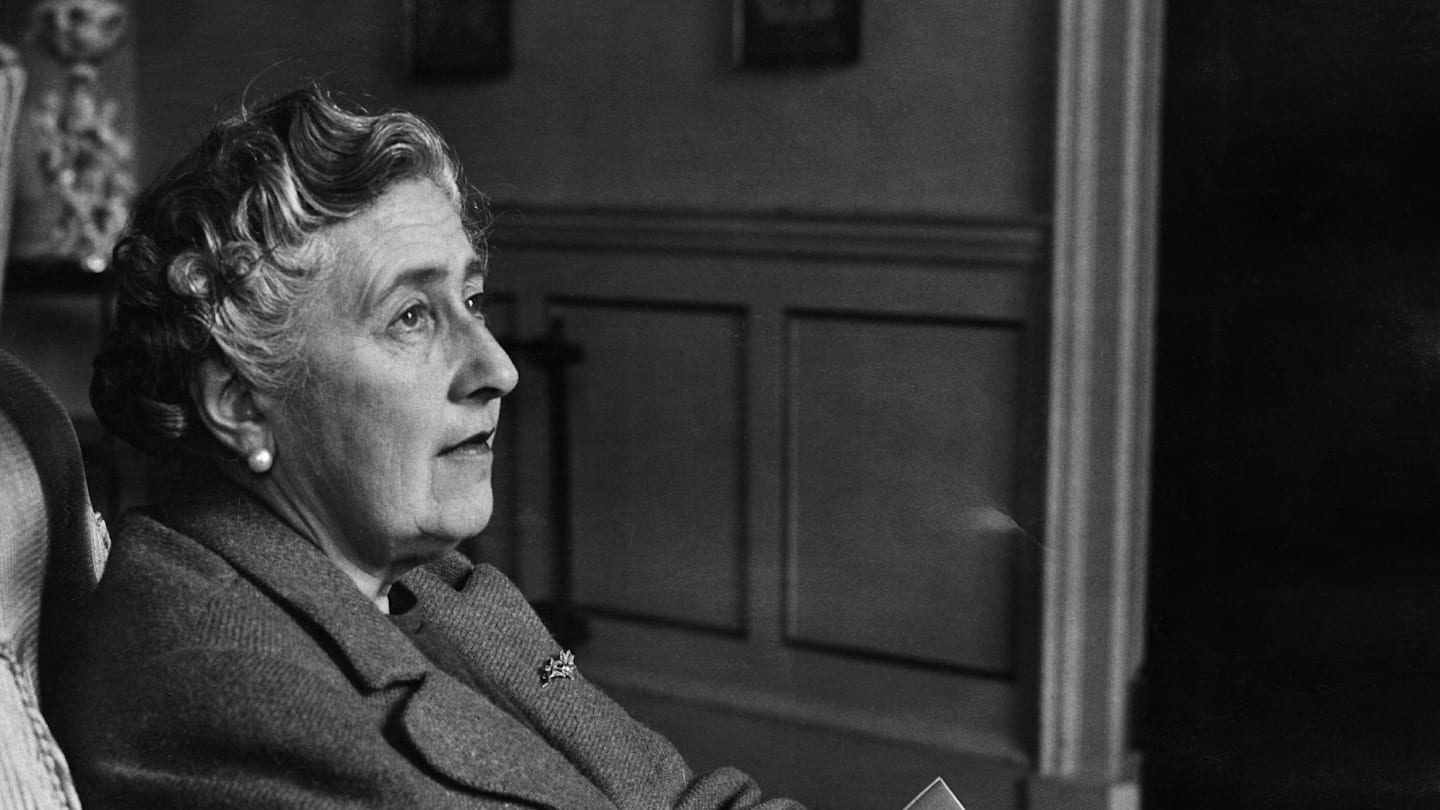
What bothers me about Agatha Christie and Ian Fleming is that it's their estate making the change. They're both dead. I either have to track down the unedited versions for Fleming or wait 9 years for the originals to hit public domain. Agatha Christie books are already hitting public domain, so I can read the originals without much effort. And I own some older printings already for both.
 
Bram Stoker rewrote The Jewel of Seven Stars in his lifetime to give it a happier, less horrific ending.
 
Last edited:
From the article it sounds like most of the changes were fairly minor, just chaging a few offensive words, most of which aren't really going to effect the overall story. Given the choice I'd much rather read it without the offensive stuff, unless the offensive is an important part of the story that needs to be in it to get the full impact of the story. Unnecessary racism, sexism, homophobia, ect that's there just to be racist, ect really pisses me off, and given the option I'd just not have to put up with it. I can still enjoy a story with that kind of stuff in if it's not to bad and there's not a ton of it, but I can only tolerate so much, and if there's a lot of it or it's really horrible, I will stop reading.
 
From the article it sounds like most of the changes were fairly minor, just chaging a few offensive words, most of which aren't really going to effect the overall story. Given the choice I'd much rather read it without the offensive stuff, unless the offensive is an important part of the story that needs to be in it to get the full impact of the story. Unnecessary racism, sexism, homophobia, ect that's there just to be racist, ect really pisses me off, and given the option I'd just not have to put up with it. I can still enjoy a story with that kind of stuff in if it's not to bad and there's not a ton of it, but I can only tolerate so much, and if there's a lot of it or it's really horrible, I will stop reading.
It's James Bond. I expect it to be somewhat offensive by today's standards. That's kinda the point.

I'd rather read it as the author originally intended.
 
It's James Bond. I expect it to be somewhat offensive by today's standards. That's kinda the point.

I'd rather read it as the author originally intended.

The thing is, if you read the article, it points out that some of the changes to the Bond books were made in his lifetime and he didn't object to them. If you have American editions of the books, the changes were made before most people in this discussion were born.

So does the removal of the n-word from Live and Let Die make the book less racist? Probably not, but, arguably, it makes the book more readable today. And it should be noted that the removal of the n-word from this novel has already happened, way back in 1954; for American readers, it was an edit they likely never noticed. While one can’t imagine a world in which someone like Ernest Hemingway would have agreed for his racial slurs to be censored, Ian Fleming gladly accepted changes made by his then-American publisher, Al Hart of Macmillan. Essentially, Hart felt that the use of the n-word in the novel was egregious and should be changed. Hart also cut a line where Leiter casually refers to New York as “the jungle.” When Live and Let Die was first published in America, racial slurs had already largely been eliminated from Fleming’s original text. According to several sources, including Andrew Lycett’s 1995 biography Ian Fleming, it appears that Fleming had no problems with Hart’s changes to his books, and generally deferred to his American editors.
 
Not an author, but I certainly wouldn't have any problem with deferring to a fluent editor's judgement about cultural, dialect, or spelling differences in other countries. I prefer it. It's weird when I read a book set in America, from the perspective of an American character, and suddenly the raised edge at the side of a road is spelled "kerb" rather than "curb." That goes doubly so for terms which are more or less offensive in one market or another, where it can put a lot of unintended shading on, for instance, James Bond using the n-word in the U.S. versus in England.

(Though, you know, fish don't know they're wet and all that; until I read that article, it never occurred to me that the phrase "urban jungle" might have a racist origin.)
 
If you are not already a member then please register an account and join in the discussion!

Sign up / Register


Back
Top