• Welcome! The TrekBBS is the number one place to chat about Star Trek with like-minded fans.
    If you are not already a member then please register an account and join in the discussion!

News Starfleet Academy Nielsen Ratings

And in any event, the "official position" of a company that owns IP is a matter of PR and marketing cant. It has no necessary bearing on the real quality, content or meaning of the property.

Except to the extent that it might reflect their corporate expectations of whomever they tap to guide the next installments, of course.

"Paramount is proud to announce that Star Trek: Renaissance will be produced and directed by veteran filmmaker Joel Schumacher."
 
Well, the original Star Trek being either intended as camp or serious drama are not the only two options, if we’re honest here. IMHO, it was very clearly meant and produced as a serious science-fiction drama. It often had humorous elements and tended to not take itself too seriously, but by and large is was presented as straight drama, morality plays, social and political allegory, speculative storytelling, stuff like that.

However, in a retrospective view it’s easy to see why some consider it (accidental) camp. Perceived production limitations, theatrical lighting, stylized set design, “rubber” alien costumes, practical effects that don’t look as state-of-the-art anymore, the acting style of the era, changed social norms, gender roles etc. can all read as “campy” to many modern viewers. And to paraphrase Susan Sontag from her essay “Notes on Camp”, the “purest” examples of camp must be dead serious and in their (failed) seriousness become camp.
 
However, in a retrospective view it’s easy to see why some consider it (accidental) camp. Perceived production limitations, theatrical lighting, stylized set design, “rubber” alien costumes, practical effects that don’t look as state-of-the-art anymore, the acting style of the era, changed social norms, gender roles etc. can all read as “campy” to many modern viewers. And to paraphrase Susan Sontag from her essay “Notes on Camp”, the “purest” examples of camp must be dead serious and in their (failed) seriousness become camp.

1772123798040.png
 
So you understand enjoying the (perceived) campy aspects of something as making fun of it and not understanding it? Why? Can’t all art be made to be one thing, but read by a recipient as another? Isn‘t that one of the things that makes art interesting?
Because, as you describe it, the perception is grounded in lack of appreciation of context.

You know, the Dutch masters just were awful at studio lighting.
 
Because, as you describe it, the perception is grounded in lack of appreciation of context.

You know, the Dutch masters just were awful at studio lighting.
I’m still not sure I understand. Why would recognizing the unintentional campiness of a piece of art or media only be the result of a lack of appreciation or misunderstanding of the context in which it was made? Why can’t I, just as an example that comes to mind, fully appreciate and love the often over-the-top acting cadence of William Shatner (or Patrick Stewart, for that matter), with a full understanding of the historical context and the “why” of it being so, and still recognize how it differs from later acting conventions and find charm and enjoyment in that?
 
The Official Site appears ro disagree -

About the Author:
Stephanie Roehler (they/she/he) is a freelancer who loves to write about video games, books, movies, TV shows, comics, and especially Star Trek.
^^^
Gee someone who probably grew up on TNG and doesn't really get TOS. And I don't much consider the examples she gave from TOS and TNG camp - just bad ideas.
(To be fair neither did SNW with S3's - A Space Adventure Hour.):shrug:
 
Calling TOS camp shows a misunderstanding of the term, and is a kind of tone deafness to style.

It was melodramatic in the way that TV westerns and cop shows often were.

What set Trek apart from most TV fantasy was that it was so earnestly similar in tone and overall style to contemporary-set network hour dramas at the time. Whereas series like Batman and Lost in Space played with a broad wink to whatever adults happened to watch them.

^^this

Multiple facets to "camp" exist, but I don't think too many would place TOS, or most Trek, in the same, eh, camp, as Batman in terms of campy runarounds and exaggerated aspects of real people and aimed squarely for outrageously comedic intent. Trek plays with these on a different level, but Trek has generally eschewed our universe and for the sake of believing their universe's drama, whereas Batman operates alongside it or plays into it - generally for self-conscious laughs, save for the odd cliffhanger for which some could be genuinely chilling... until these were replaced by increasing levels of dumb that drove viewers away.

Batman66 definitely shows intentional camp for risible comedic intent. TOS was asking you to believe the improbable as serious, because we really don't know what's out there - even more so in 1966. There are definite facets to both shows and definitions.

Add in the passage of time and materials cost, etc, and it's easy to see ideas retroactively applied that might not be the case as it's easy to discover how expensive TOS was to make at the time. Lots of people say nowadays it looks cheap, without fully understanding of the details of the time (which is inevitable after a certain point), we've all been on both sides of this phenomenon, etc.

TOS definitely can be called melodramatic. That's what all sci-fi needs as character drama can too easily be overdone and without the plot inducing some dramatic effect (the underlying melodrama), you've got nothing for the characters to react to. Balance seems to need a bit of both character and plot-based grounding, even in the unknowns and technical absurdities (not comedic) of what may be out there in outer space. Getting drama to feel authentic out of the situation is a more difficult request as it's too easy to overact or render any dramatic buildup moot and coming across hokey (melodrama).

Most importantly: TOS was even sold in advertisements that it was adult sci-fi, as means to directly differentiate it from kid and truly campy shows like "Lost in Space" (which is fun, but the differences speak for themselves.) It rarely was a comic book or live action cartoon, which LiS was - as well as Batman66.

To view this content we will need your consent to set third party cookies.
For more detailed information, see our cookies page.

The A-word is mentioned outright: "Adult".

TOS is also more akin to "televised theater" as in "televised stageplay", which was simply the norm of the time - you guessed it - describes "camp" as well.

The other elephant in the room regarding word definition, as "camp" has multiple definitions: It can be described as intentionally silly for comedic effect. It can be described as "low budget". Add in a few more and it's easy to see where conflation begins. But in tonal quality? Many of the TOS (and TNG) episodes that have that more often than not tried being no less serious but failed, inducing accidental mirth from the audience. Big difference. Trek, even season 3, was not intentionally trying to get Batman's ratings.

Another show comes to mind, "The Man from UNCLE". From day one it was exploring technically outrageous things, as the spy genre was wont to do. But it's pretty much season 3 that tries to blend in "the Batman effect" and viewship vanishes. Unlike other shows, TMfU tried to course-correct, and season 4 is wholly underrated, but the viewers did not return. (And as the Batman comic was generally seen as serious by fans, you can bet credits to navy beans* that fans who tuned into the silliness balked. And to think season 1 had moments of stern seriousness before season 2 flanderized it all by making everything silly for the sake of it, which is when ratings started to drop, hence the retooling for season 3 (but forgetting to reverse course and not be so hokey, so ratings continued to drop.)

* That I'll accept as intentional camp, in an episode that was trying hard not to go Batman on everyone's heiney.

Then add in intentionally-comedic episodes like the Tribbles episode or 1920s gangster world (which took an improbable and cost-saving idea once played seriously and now used it deliberately for laughs and that episode I would absolutely call "campy", but it's more of an exception to TOS and not the general standard, which helps because if every episode felt like Batman-lite, would TOS really be held to any regard nowadays? Conversely, look at how serious Batman became since the 1990s and how many throw out the 1966 version as being stupid. Fun fickle things, audiences are... )

Long story short, everyone's not wrong.

 
The Official Site appears ro disagree -


A good article and read indeed (thank you!), and it took chutzpah to try to get people to embrace some of the episodes deemed "worst", especially "The Naked Now"'s level of Swiss cheese inconsistencies, especially as the show was also trying to be its own thing so its choosing to do space orgy for cheap thrills ensured it wasn't a fan favorite, even in repeat viewings. (Indeed, "The Naked Now" had "The Measure of a Man" turning that lemon into lemonade... at least before the lemons morphed into turnips...)

"Menage a Troi" doesn't quite know if it wants to be serious or silly, and definitely falters in the latter and stretches credibility for the former. Even Batman66 with its outrageousness made it believable and to buy into their situations (especially with some of season 1's creepy death traps). Sitting through the two aforementioned TNG stories, it's hard to buy into their universe at those times.

"Masks" too plays it utterly straight, and even feels like something TOS might do if it had even half the resources available, but it also has no self-aware send-ups like what Batman66 had.

"Tuvix" readily shows a ridiculous situation (on top of transporters, a technically impossible device), but note the tone and flow and then try to compare it to Batman66. Voyager wants you to believe in the proceedings, and avoids sending it up for mirth as that's not the intent or point of the fourth spinoff (TAS, TNG, DS9, VOY).

Even "Threshold", which fans certainly reacted to, scripted itself into a corner. They could send it up in a self-aware or self-deprecating joke, or roll with it and just leave any and obvious poking by the fanbase. Thankfully VOY had enough episodes that were higher in quality to improve the balance so that "Threshold" wouldn't have people leave the show completely.

Without enough Trek taking itself seriously with situations that are technically ridiculous (but not meant to be ha-ha-funny), then any parody or light-hearted funny episode wouldn't begin to land. For quick example, "Lower Decks" is often hysterical, laughing with rather than at it and, indeed, made lemonade out of the Pakelds too. So in a way it is all camp, it's the tonal quality, verisimilitude, and gravitas that help make a situation. Depends on where one is going for, how often they can bend the format to prevent getting stale, etc.

All that said, all these episodes have their fans and - YES - they shake up the format, which helps prevents everything from getting stale. At the end of the day, audiences will gravitate to what they like the most and for the reasons they like. It's still just entertainment at the end.


About the Author:
Stephanie Roehler (they/she/he) is a freelancer who loves to write about video games, books, movies, TV shows, comics, and especially Star Trek.
^^^
Gee someone who probably grew up on TNG and doesn't really get TOS. And I don't much consider the examples she gave from TOS and TNG camp - just bad ideas.
(To be fair neither did SNW with S3's - A Space Adventure Hour.):shrug:

Or potentially good ideas that weren't well-executed? At least season 1 TNG was stumbling around trying to find itself. Later seasons become more interesting but not for the same reasons...

Great point though, the makers of TOS and even those growing up watching it as kids would have the most to say.

TOS was also more macro-level (esp. for the 1960s) and TNG more often explored micro-level or being more introspective to find new ground with (sometimes even navel-gazing.) Trek's done it all.
 
^^this

Multiple facets to "camp" exist, but I don't think too many would place TOS, or most Trek, in the same, eh, camp, as Batman in terms of campy runarounds and exaggerated aspects of real people and aimed squarely for outrageously comedic intent.
Just imagine TOS with those bat-fight word bubbles.
 
The Official Site appears ro disagree -


startrek.com said:
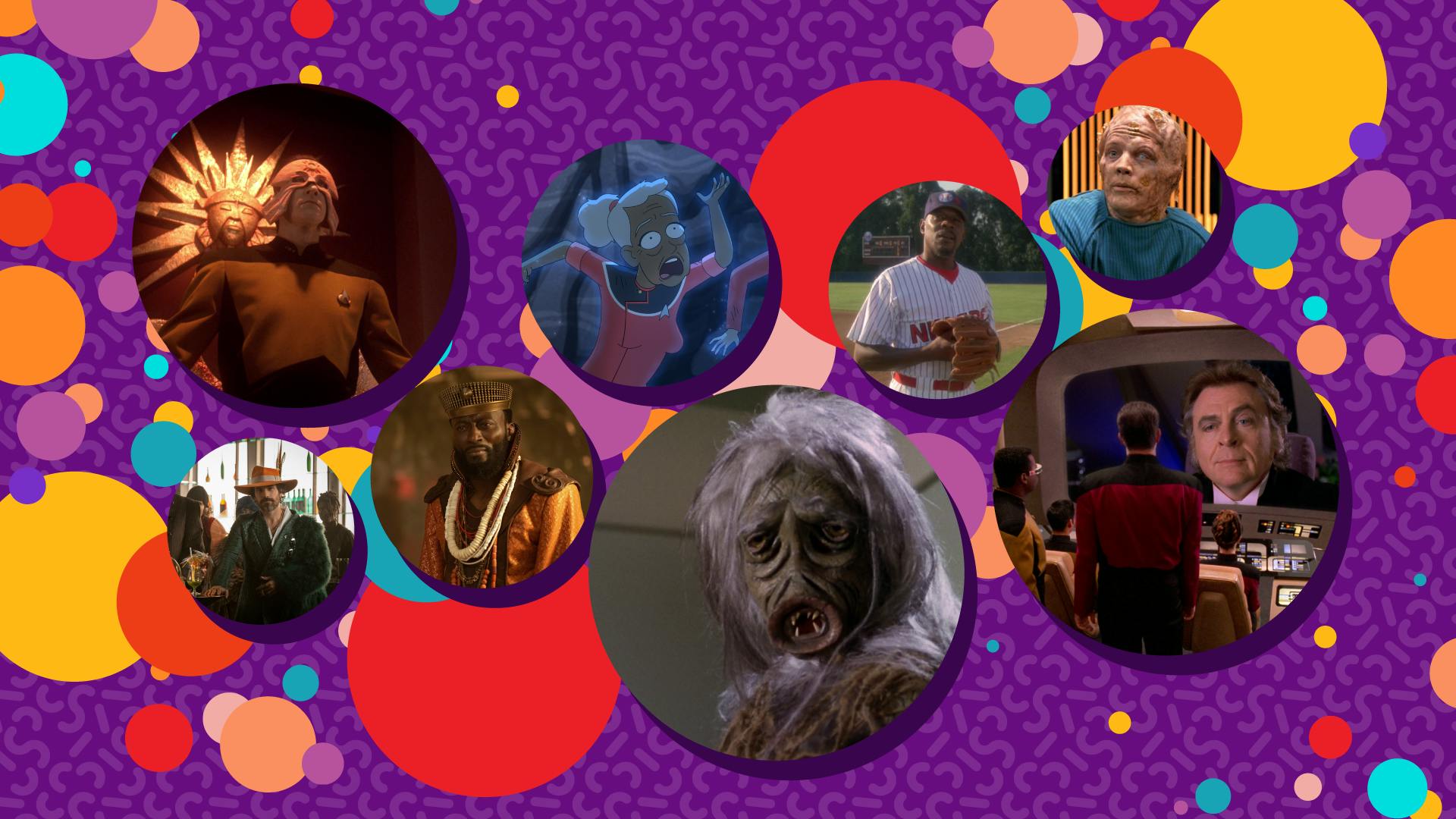
Given the beloved legacy and impact of these episodes, not only should we love Star Trek's camp, but hope for more of it. More salamanders, more ghost boyfriends, more weird omniscient space entities throwing temper tantrums. Because the more we encourage Trek writers to explore the absurdity of space, the better its beauty, drama, and heartbreak can be.
The beloved legacy and impact of Threshold and Sub Rosa?

Okay to be fair this comes right after a paragraph about Strange New Worlds' The Elysian Kingdom... which still the lowest rated episode of the entire series on IMDb even after season 3.

Star Trek doesn't aim for camp, it has iconic designs, sincerity and more ambition than money, which always leads to things looking slightly ridiculous over time. Some people love it because they find the bad episodes entertaining, and that's fine. But it didn't set out to make bad episodes.
 
Or potentially good ideas that weren't well-executed? At least season 1 TNG was stumbling around trying to find itself. Later seasons become more interesting but not for the same reasons...
Sadly modern streaming shows don't have that option.

One of the many things lost by having 6-10 episode seasons.
 
Sadly modern streaming shows don't have that option.

One of the many things lost by having 6-10 episode seasons.
Maybe they have fewer chances of trying out stuff, but shorter seasons don’t mean they don’t have that chance at all. I’m pretty sure some of the episodes we got thus far in season one of SFA were viewed as experiments by the writers, seeing what works and what doesn’t. I don’t understand why fewer episodes would mean they “don’t have that option”.
 
I’m still not sure I understand. Why would recognizing the unintentional campiness of a piece of art or media only be the result of a lack of appreciation or misunderstanding of the context in which it was made? Why can’t I, just as an example that comes to mind, fully appreciate and love the often over-the-top acting cadence of William Shatner (or Patrick Stewart, for that matter), with a full understanding of the historical context and the “why” of it being so, and still recognize how it differs from later acting conventions and find charm and enjoyment in that?
Camp would be Lost in Space or the 1966 Batman tv show. The minimalistic sets on TOS were not camp. Shatners acting certainly was not camp. Look ar City on the Edge of forever. TOS was a drama set in space. Sure it had maybe two humorous episodes and bad ones like Spocks Brain but the show on the whole was considered and still is serious sci fi.

Now SFA. That is bordering on camp and silliness.
 
If you are not already a member then please register an account and join in the discussion!

Sign up / Register


Back
Top