

In this episode of Event Horizon, John Michael Godier is joined by SETI scientist Benji Fields to explore one of the most intriguing optical SETI searches to date. Using archival data from the HARPS spectrograph, Fields walks through how his research identified three unexplained laser-like signal candidates after systematically ruling out cosmic rays, atmospheric effects, instrumental artifacts, and known stellar processes.
Astrophysical masers (superradiant emission in the microwave region of the EM spectrum) are caused by stimulated emission of a gain medium that has undergone non-thermal population inversion of energy states - although they do not use resonant cavity feedback and so lack spatial coherence and mode purity. After stellar emission lines, air glow, aurorae and human -produced laser sources used in adaptive optics (AO) and LIDAR, it's hard to think of ways that single, discrete line radiation at visible light frequencies with laser characteristics might be produced naturally, so an artificial source would seem likely. The characteristics of astrophysical masers are well known and any similar natural emission at visible light frequencies should exhibit similar characteristics. The attempt to eliminate false positives is discussed in the video better than I can here.
This type of search seems more likely to turn up results than searching in the radio spectrum. What other potential communication channels might we explore?
I doubt that aliens would go to the trouble and expense of building megastructures to occlude a star as seen from the point of view of our insignificant blue speck, as has been suggested for Tabby's Star (KIC 8462852) and other strange transient/transit events, but I could envisage that they would use tightly collimated coherent radiation and that some of this might leak into our detectors due to diffraction.

Astrophysical maser - Wikipedia
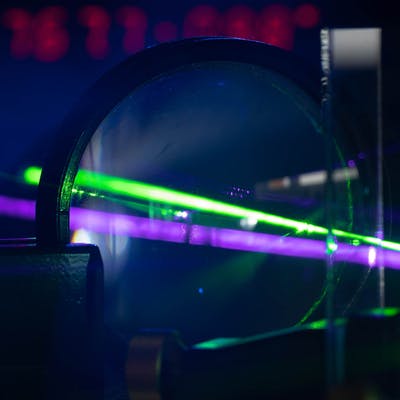
Collimated Beam: Definition, How It Works, Applications, and Benefits
A collimated beam is a stream of light particles that travel parallel to each other, without spreading out. Learn more about it here.
www.xometry.com
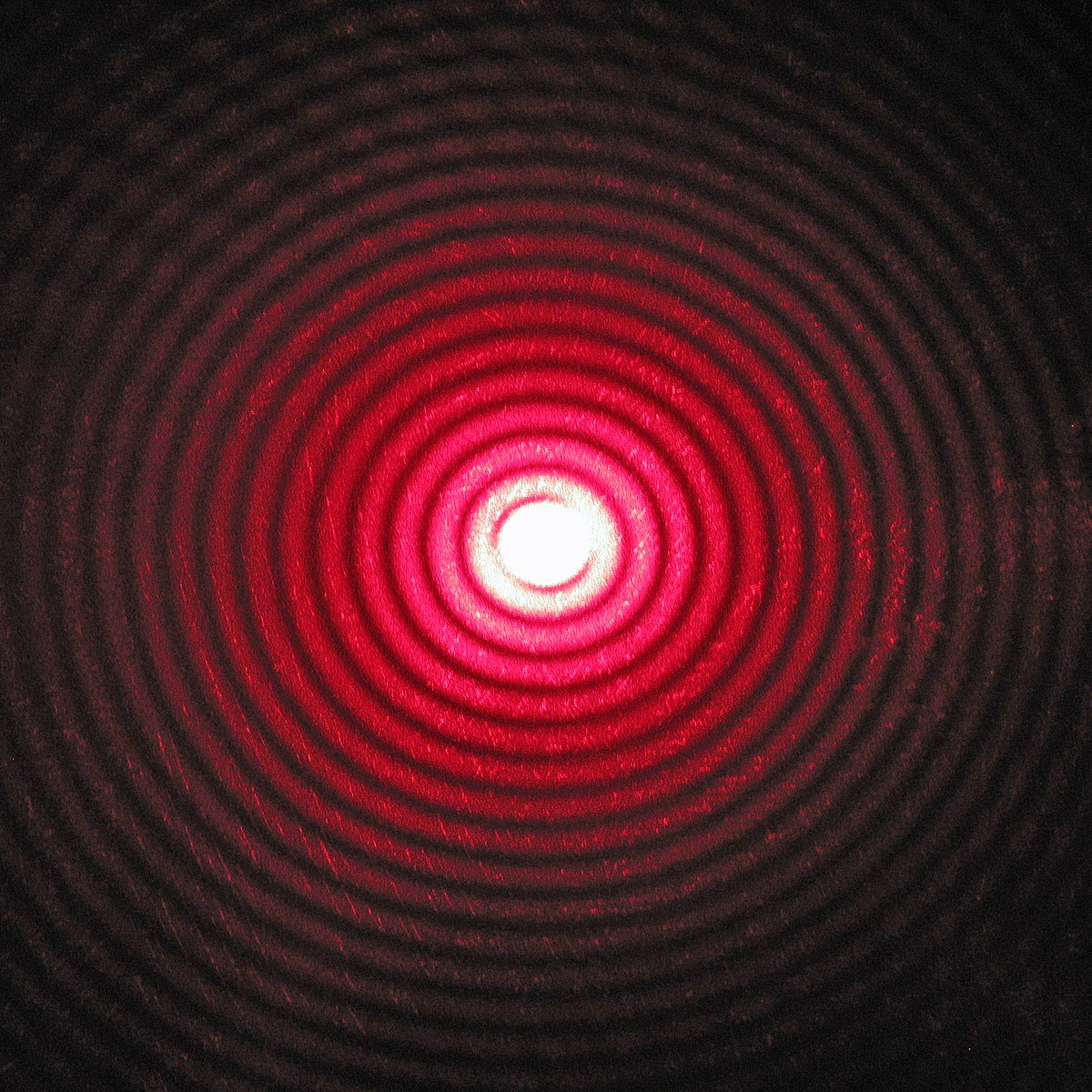
Diffraction - Wikipedia
Last edited: