Time Magazine published a lengthy article about the film yesterday and it's wealth of information!
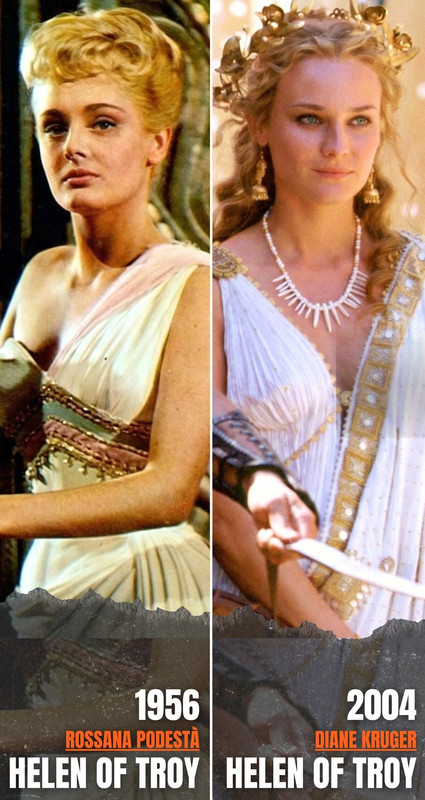
One of the biggest reveals is that Lupita Nyong'o is finally confirmed as Helen of Troy...but she's
also playing Clytemnestra! Considering their brothers are Castor and Pollux, it makes sense for Helen and Clytemnestra to be twins, too, even if Greek Mythology never referred to them as such (at least to my knowledge). The article also confirms an early rumor: Of course Bill Irwin is Polyphemus. Additionally, Samantha Morton is Circe.
Getting into the meat of the article, I loved how the article goes into detail at two different points about how the poem is adapted:
He has also studied the text and made several striking adaptation choices. Argos, Odysseus’ loyal dog, has been promoted from a cameo to a bit player. Odysseus and his son Telemachus (Tom Holland)—burdened by the legend of a father he doesn’t remember—are given more time together. Circe, an archetype in Homer’s version, gets a humanizing update thanks to Samantha Morton’s unsettling yet sympathetic performance. And the reunion between Odysseus’ fellow king Menelaus (Jon Bernthal) and his wife Helen (Lupita Nyong’o)—the most beautiful woman in the world, blamed for starting the war after a Trojan prince spirited her away—has always felt too neatly resolved in the poem. Nolan complicates it. And in a twist, Nyong’o also plays Helen’s sister, Clytemnestra, whose marriage to Menelaus’ brother Agamemnon (Benny Safdie) is, to put it mildly, acrimonious.
.
.
.
That, Nolan thought, was perfect for Odysseus. The Homeric hero most of us remember from high school is the crafty guy behind the Trojan Horse. But he’s also arrogant and duplicitous. A line in Emily Wilson’s translation sums him up: “Lying Odysseus replied, ‘I will tell you the truth completely.’” For Nolan, one of the hardest things about adapting The Odyssey is that in The Iliad, Odysseus has a relatively minor role. “A lot of the characteristics of Odysseus that can be really admirable in a supporting character, like being a bit clever, being a bit slick, when your hero is like that, it doesn’t always work,” he says. “There’s a reason that in Star Wars, you’ve got Han Solo, but you’ve also got Luke Skywalker, a heroic figure that’s a little more pure and transparent. So the challenge was to be true to the complexity of Odysseus but make him relatable for the audience.”
What compels Odysseus—and compels audiences to root for him—is his love for his wife. Penelope waits 20 years for a husband everybody else thinks is dead. She manages to repeatedly outwit the 108 suitors plotting to court her, murder her son, and usurp Odysseus’ throne. Hathaway was pleasantly surprised when she read Nolan’s script and saw that the queen doesn’t just sit around and weep.
“There’s this impression of Penelope that she’s kind of the picture of modesty. She’s the picture of patience,” says Hathaway. “And I said, ‘Chris, if I’m not mistaken, you’ve written someone who is full of fury and you seem to be implying that she’s actually Odysseus’ equal.’” This Penelope matches her husband not just in intellect but in passion. “I found her to be this volcano of a human that was always simmering. It was really fun when she finally exploded.”
Another part that stands out to me is how Nolan and Göransson developed the film's score to make it feel more authentic that period...complete with lyre:
In the corner of three-time Academy Award–winning composer Ludwig Göransson’s studio sits a lyre nearly the size of a grown man, one room over from a ping-pong table that, at the push of a button, disappears into the floor. For Göransson and Nolan, the ancient and the modern are not so far apart
Nolan instructed Göransson not to use an orchestra in the score, if only to subvert expectations for a swords-and-sandals film. “It’s not like the orchestra existed back then,” says Göransson. “It was a challenge and also an opening to try to make something unique.” Instead, Göransson rented 35 bronze gongs of varying sizes, experimented, recorded them with synths, and began sending the director songs. Nolan also put rapper Travis Scott in the film as a bard. “I cast him because I wanted to nod towards the idea that this story has been handed down as oral poetry, which is analogous to rap,” says Nolan. Even the string instrument plays a surprising role. “Chris had this idea of the sound of the lyre being the pluck of Odysseus’ bow,” says Göransson.
And, of course, Nolan addressed the concerns about the controversial depiction of weapons, armor, and boats in the film:
Nolan speaks with pride about the level of research that went into the production from all departments, especially considering our Bronze Age knowledge is based on “very fragmentary archeological records.” When the trailer dropped, classics buffs complained about Agamemnon’s armor—dark, shiny, and reminiscent of Nolan’s Batsuit. But what struck some as fantastical Nolan defends as feasible. “There are Mycenaean daggers that are blackened bronze. The theory is they probably could have blackened bronze in those days. You take bronze, you add more gold and silver to it and then use sulfur,” says Nolan. “With Agamemnon, Ellen [Mirojnick], our costume designer, is trying to communicate how elevated he is relative to everyone else. You do that through materials that would be very expensive.”
Nolan offers equally thorough explanations for every production choice, from the boats to the weapons, all of which draw on both the Bronze Age and Homer’s era, hundreds of years later. “The oldest depictions of Homeric characters tend to be depicted in the manner of people living in Homer’s time,” he says. “So there’s a pretty strong case there for portraying things that way because that’s the way the first audience received the story.”
I know that probably won't appease some people and that's fair. But Nolan's
interpretation of that aspect of storytelling works for me.
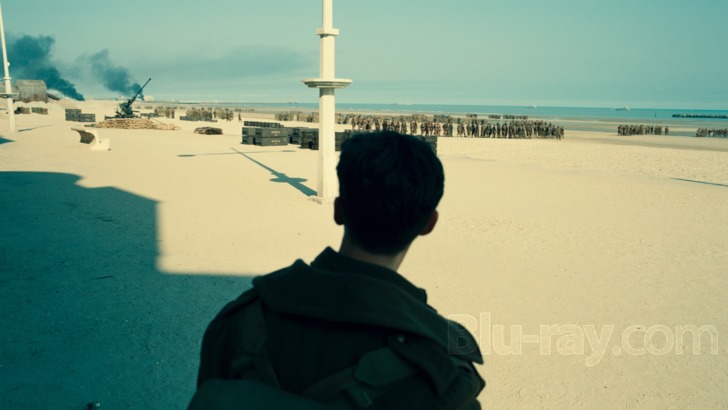
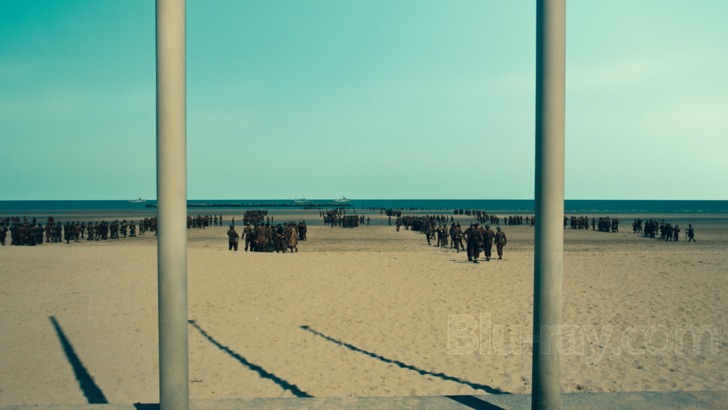
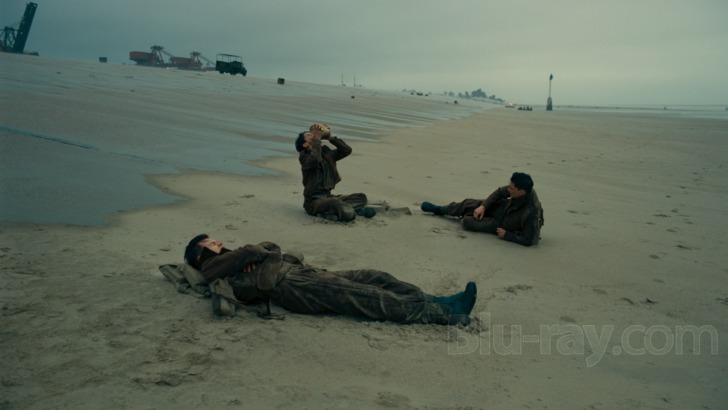
But the most striking thing about the article is how it keeps returning to the point of how Nolan used practical effects and on location settings with no soundstages or green screens for the entire film. Damon goes as far as comparing him to David Lean (
The Bridge on the River Kwai, Lawrence of Arabia, Doctor Zhivago, among others) which is high praise indeed.
Damn, I cannot wait to see this film!


 www.bbc.com